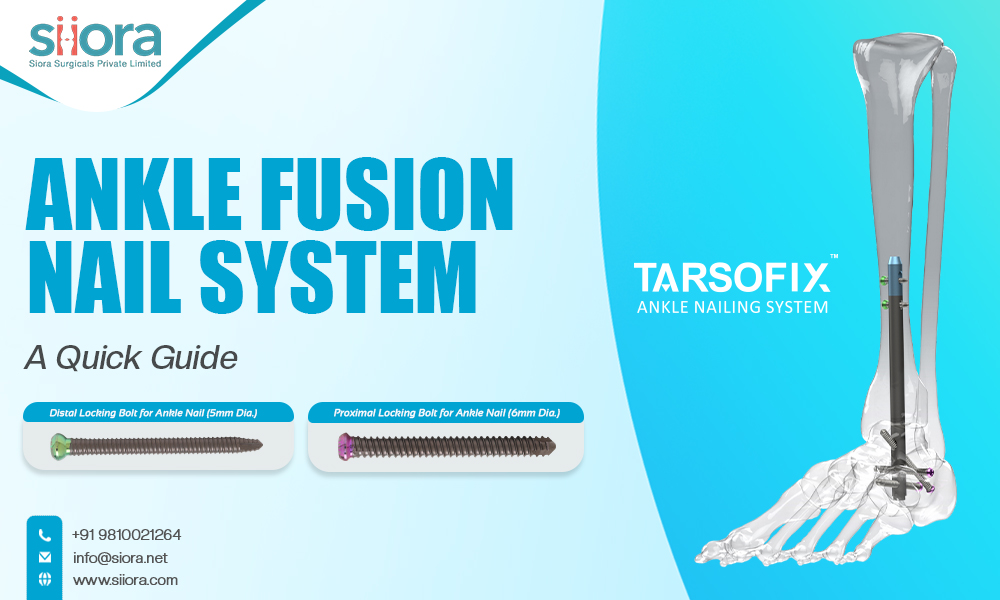
Living with stubborn ankle pain can slowly take over your day. At first, it’s a mild ache after long walks. Then it starts bothering you during routine activities—standing in the kitchen, climbing a few steps, or even taking out the trash. When it reaches that point, most people begin looking for a solution that lasts longer than another round of painkillers or an ankle brace. This is where ankle fusion enters the conversation, especially the approach that uses an ankle fusion nail system.
Why Fusion Becomes Necessary?
Severe arthritis, repeated injuries, or old fractures can gradually strip the ankle joint of its cushioning. Once the cartilage is mostly worn away, every step feels like bone grinding against bone. Fusion isn’t about giving the ankle more movement—it’s about giving a person their life back by removing the painful motion altogether. When the bones are fused, they heal into a solid unit, trading painful instability for dependable support.
How Does the Nail System Help?
Older techniques relied heavily on plates, screws, or bulky frames outside the leg. They still work, but intramedullary nails changed the game by offering a more direct and stable way to hold the ankle still while the bones fuse. Instead of locking everything from the outside, the nail sits inside the bone canal and shares the load more naturally.
These nails come with locking screws and angle-stable features that let surgeons fine-tune the alignment. The real advantage here isn’t just the hardware—it’s the way it allows the ankle to heal under steady, controlled pressure, which is exactly what fusion needs.
What Happens During Surgery?
The procedure itself follows a clear sequence. The surgeon prepares the damaged joint surfaces, positions the foot where it needs to be for long-term comfort, and then introduces the nail from the heel upward. Locking screws secure everything in place. While it may sound intense, this approach usually means less disruption to surrounding soft tissue, and many patients handle the recovery surprisingly well.
Benefits Patients Often Notice First
What people appreciate most is the stability they feel afterward. The ankle won’t bend anymore—that’s expected—but the constant pain settles down, which often feels like a huge relief. Another plus is that many patients can start putting some weight on the leg earlier than with older methods. That makes day-to-day life a little easier, especially for those who don’t have the luxury of staying off their feet for long.
Once healing is solid, walking becomes more predictable. Standing is easier. Long days hurt less. You won’t regain ankle motion, but you do regain confidence in your steps—something chronic pain slowly takes away.
Who Usually Benefits?
Surgeons typically recommend a fusion nail when arthritis is advanced or when previous surgeries haven’t given lasting improvement. It’s also a strong option for people whose ankles have become unstable or deformed over time. Factors like bone quality, age, and general health all help determine whether this method is the right fit.
Things to Keep in Mind
Fusion takes patience. The bone needs time to knit together, and smokers or people with circulation issues may need a little more time to get there. Follow-up visits, protective weight-bearing, and staying consistent with post-operative instructions all matter.
But once fusion is solid, most patients feel a dramatic change in how they move, work, and take on their daily routines.
In Closing
The ankle fusion nail system orthopedic implant has become a trusted option for people who want long-term relief from severe ankle pain. It offers a blend of stability, predictable healing, and a more practical recovery path. If you’ve been living with an ankle that hurts more than it helps, this approach may be worth discussing with an orthopedic specialist.
 Site Title