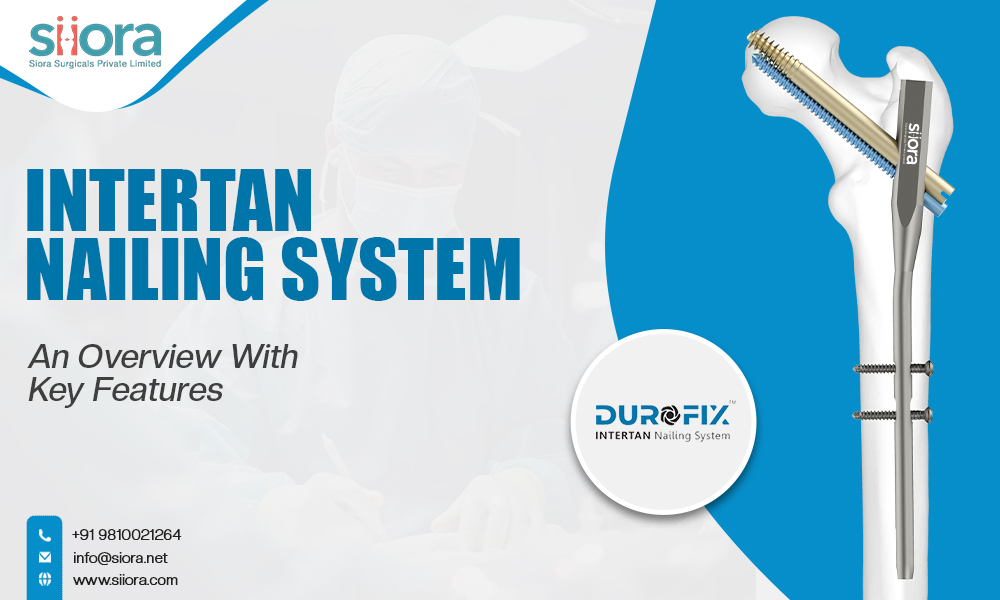
Breaking a femur is no small injury. This is the largest, strongest bone in the body, and when it cracks—especially near the hip—it changes everything about a person’s movement and daily life. Fixing such fractures isn’t just about holding the bone still; it’s about giving patients the chance to walk again, and as soon as possible. That is where intramedullary nails come in, and among them, the Intertan Nailing System has carved out a unique spot for itself.
It’s not just another nail. Surgeons describe it as predictable, reliable, and a real improvement over older implant designs. But what exactly makes it different?
What It Is—In Simple Words.
The Intertan system is basically a metal rod placed inside the femur to stabilize fractures close to the hip (usually intertrochanteric fractures). Unlike plates or some older nails, it sits within the bone, sharing the load while healing takes place. Where it really stands apart, though, is in its two-screw design.
Instead of one screw holding the top of the femur, the Intertan uses a lag screw plus a compression screw that are built to work together. It might not sound like a big tweak, but mechanically, it changes everything.
Why Two Screws Are Better Than One?
The dual screws create better rotational stability and, at the same time, allow the surgeon to compress the fracture line. That compression presses the bone ends firmly together, giving nature a perfect chance to do its job—bridge the gap and heal the break.
And here’s a bonus: this system avoids issues like the “Z-effect” (where one screw backs out while the other drives too deep). Since the screws interlock, it’s one stable construct rather than two pieces that can drift apart.
A System Built With Options
Not all fractures look the same. Some are clean and simple; others are long, messy, and unstable. The Intertan is designed with short and long nail variations, so the surgeon can choose what’s best for that specific patient.
The short nail is quick to insert and works for straightforward breaks. The longer nail is reserved for complex patterns that extend down the shaft and need extra control. That flexibility saves time in the operating room and makes decision-making easier.
What Does This Mean for Patients?
Of course, patients don’t really care about screw geometry or nail lengths. What matters is whether they’ll be able to walk again without constant fear of the leg giving way. And this is where the Intertan system has advantages that show up outside the operating room.
Because the nail offers strong fixation and stability, many patients can start weight-bearing earlier than with some traditional systems. That early movement restores confidence and reduces complications linked to being immobile too long, like muscle wasting or blood clots.
In simple terms: it helps people get moving faster. And anyone who’s ever been laid up with a major injury knows just how important that is.
Why Surgeons Prefer It?
From the surgeon’s view, the Intertan nail provides peace of mind. It reduces the chances of hardware failure, avoids the common cut-out issues, and allows more consistent results. Plus, the nail’s anatomical curve fits better with the natural shape of the femur, which reduces unnecessary stress.
That design detail may sound small, but when you’re handling delicate bone—especially in elderly patients with osteoporosis—anything that minimizes complications is huge.
Wrapping It Up
Orthopedic implants aren’t about flash—they’re about function. And the Intertan Nailing System has earned respect because it works where it matters most: holding difficult fractures in place, keeping screws where they belong, and helping patients get back to their lives.
Is it perfect? No implant ever is. But its dual-screw system and compression ability solve problems that frustrated surgeons for years. That’s why many consider it one of the most reliable tools for hip and femoral fractures today.
Learn more about newer and improved orthopedic implants, including other healthcare products, at the premier Arab Health Expo 2026.
 Site Title