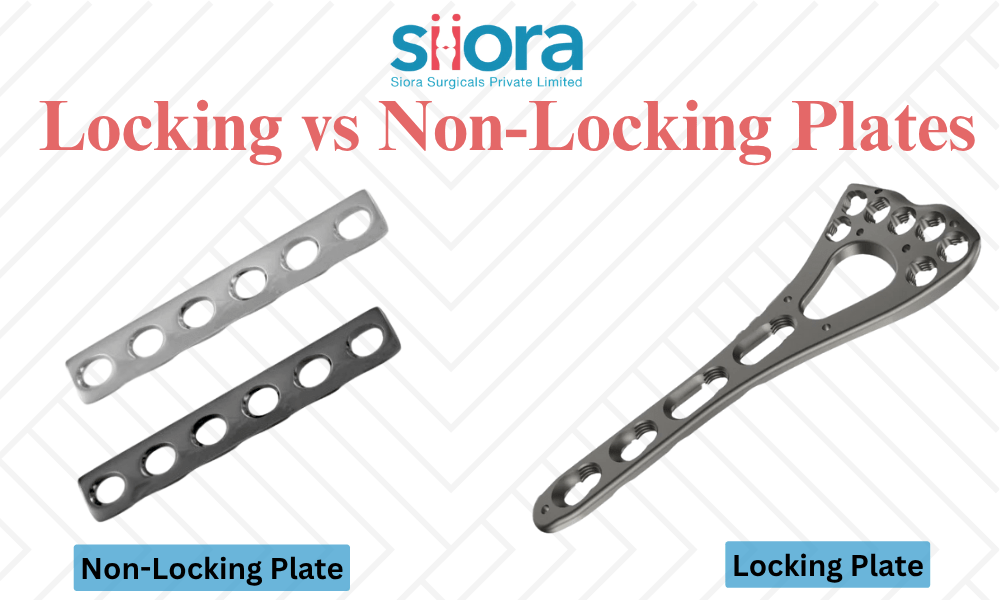
If you’ve ever fractured a bone and needed surgery, there’s a good chance your surgeon used plates and screws to hold everything in place. But not all plates are created equal. The difference between a locking plate and a non-locking plate might sound technical, but it’s actually a big deal when it comes to how bones heal and how well patients recover.
The Basics: What Are Bone Plates?
Bone plates are metal devices, usually made of stainless steel or titanium, that orthopedic surgeons use to stabilize broken bones. They’re screwed into the bone and act like an internal splint, holding everything in the right position while the body does its natural healing work.
There are two main types: non-locking plates and locking plates. Both serve the same basic purpose, but the way they interact with the bone and screws is where the key difference lies.
Non-Locking Plates: The Traditional Workhorse
Non-locking plates have been around for decades. They work by pressing the plate directly against the bone, with screws that go through the plate and into the bone underneath. The plate relies on this compression to stay in place. The friction between the plate and the bone surface helps stabilize the fracture.
Pros:
- Great for certain types of fractures where bone fragments can be aligned neatly.
- Cheaper than locking plates.
- Well understood by surgeons, with a long track record of success.
Cons:
- Requires the bone surface to be in good shape.
- If the bone is soft (think elderly patients with osteoporosis), the screws can loosen.
- It depends heavily on how tightly the plate is pressed against the bone.
Locking Plates: A Newer, Smarter Design
Locking plates change the game. Instead of relying on the plate pressing against the bone, the screws actually lock into the plate itself, kind of like screwing a bolt into a nut. This creates a fixed-angle system where each screw is locked into position and doesn’t rely on bone quality to maintain stability.
Pros:
- Excellent for fractures where the bone is weak, brittle, or shattered.
- Doesn’t need to compress the bone, reducing the risk of blood supply disruption.
- Stronger overall fixation, especially in challenging cases like complex or multi-part fractures.
Cons:
- More expensive.
- Not always necessary—can be overkill for simple breaks.
- Requires specific tools and techniques.
Why It Matters?
Choosing between locking and non-locking plates isn’t just a technical decision, it directly affects recovery time, complication rates, and long-term outcomes.
For younger patients with strong bones and simple fractures, non-locking plates often do the job just fine. But in older adults, especially those with osteoporosis, locking plates can mean the difference between a successful surgery and one that fails. They reduce the risk of screws backing out or the plate losing grip, which can lead to re-operations or poor healing.
Surgeons also consider the fracture type. If the bone is shattered into several pieces, locking plates provide better support without relying on bone contact for stability.
The Bottom Line
Locking and non-locking plates aren’t rivals; they’re just trauma implants in a surgeon’s toolkit, each with its own strengths. What matters most is picking the right one for the right situation.
If you’re a patient, you don’t need to know all the surgical details. But it helps to understand that these choices aren’t one-size-fits-all. They’re based on your specific injury, your bone quality, and what’s going to give you the best shot at healing fast and getting back to normal life.
 Site Title