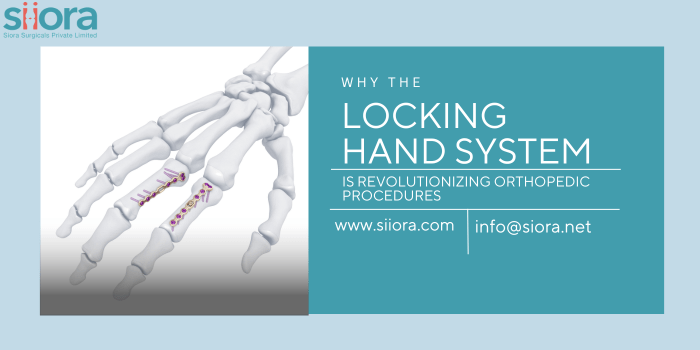
Orthopedic surgery has witnessed tremendous advancements over the years, with innovative techniques and technologies transforming the field. Among these, the Locking Hand System (LHS) stands out as a game-changer. This revolutionary approach has redefined how surgeons address complex fractures, providing enhanced stability, better outcomes, and improved patient recovery. Let’s delve into why the Hand Locking System is setting new standards in orthopedic procedures.
Enhanced Stability and Fixation
Traditional orthopedic systems often rely on plates and screws that create friction between the bone and the implant. While effective in many cases, this method can lead to complications such as implant loosening or bone resorption. The Locking Hand System eliminates these issues by using locking screws that anchor securely into the plate without compressing the bone.
This unique design creates a fixed-angle construct, significantly enhancing stability. Surgeons can now address complex fractures, particularly in areas like the hand and wrist, with greater confidence. The system minimizes micro-movements at the fracture site, promoting optimal healing conditions and reducing the risk of complications such as malunion or nonunion.
Precision in Treatment
The Hand Locking System is tailored to meet the anatomical and biomechanical needs of the hand. Its precision-engineered plates and screws allow for meticulous fracture alignment, even in the most intricate cases. This level of accuracy ensures that the natural anatomy of the hand is preserved, which is critical for functionality and aesthetics.
Additionally, the system includes a variety of plate options, catering to different fracture patterns and sizes. This versatility allows surgeons to customize treatment for each patient, ensuring a more individualized approach. With the Locking Hand System, achieving optimal outcomes is no longer a matter of chance but a predictable result of precision engineering.
Improved Patient Outcomes
One of the most significant benefits of the Locking Hand System is its positive impact on patient recovery. By providing a stable and anatomically precise fixation, the system reduces the need for prolonged immobilization. Patients experience less discomfort, regain mobility faster, and are able to resume daily activities sooner.
The system also minimizes the risk of secondary surgeries. Traditional fixation methods often require removal or revision due to complications. In contrast, the Hand Locking System’s durable construct and compatibility with biological healing processes reduce these risks, leading to fewer follow-up procedures and better long-term outcomes.
Streamlined Surgical Workflow
The hand fracture system isn’t just beneficial for patients; it’s also a boon for surgeons. The system’s intuitive design and pre-contoured plates simplify the surgical process. Surgeons can reduce operative time without compromising on precision or quality.
Additionally, the system’s comprehensive instrumentation ensures that every step of the procedure is seamless. From fracture reduction to plate fixation, the hand plating system streamlines workflows, allowing orthopedic teams to focus on delivering the best possible care. This efficiency translates to reduced operating room costs and increased patient throughput, making the system an asset for healthcare providers.
Addressing Unique Challenges
Fractures in the hand and wrist pose unique challenges due to the intricate anatomy and the high demand for functionality in these areas. The Locking Hand System’s design directly addresses these complexities. Its low-profile plates reduce the risk of soft tissue irritation, while its locking mechanism ensures stability in small and delicate bones.
Moreover, the system is compatible with minimally invasive surgical techniques. This capability is particularly beneficial for patients who require reduced surgical trauma and faster recovery times. The combination of minimally invasive approaches and the Hand Fracture System’s robust fixation capabilities represents a significant leap forward in orthopedic care.
Advancing the Field of Orthopedics
The introduction of the Locking Plates for Hand Surgery has not only improved individual patient outcomes but also elevated the standards of orthopedic surgery as a whole. It exemplifies how innovation can address longstanding challenges, paving the way for future advancements.
As research and development continue, the Locking Hand System’s applications may expand beyond the hand and wrist, potentially revolutionizing other areas of orthopedic surgery. Its success underscores the importance of integrating advanced engineering with medical expertise to push the boundaries of what’s possible in healthcare.
Conclusion
The Locking Hand System is more than just a surgical tool; it’s a testament to the transformative power of innovation in medicine. By offering enhanced stability, precision, and improved patient outcomes, it has set a new benchmark in orthopedic procedures. As more surgeons adopt this groundbreaking system, the future of fracture management looks brighter than ever.To get a CE-certified range of trauma implants and instruments, contact Siora Surgicals Pvt. Ltd., a renowned orthopedic manufacturer in India. The company has a huge global presence with a distributor base in 50+ countries. Additionally, Siora is also looking to establish itself among the leading orthopaedic companies in Dubai.
 Site Title