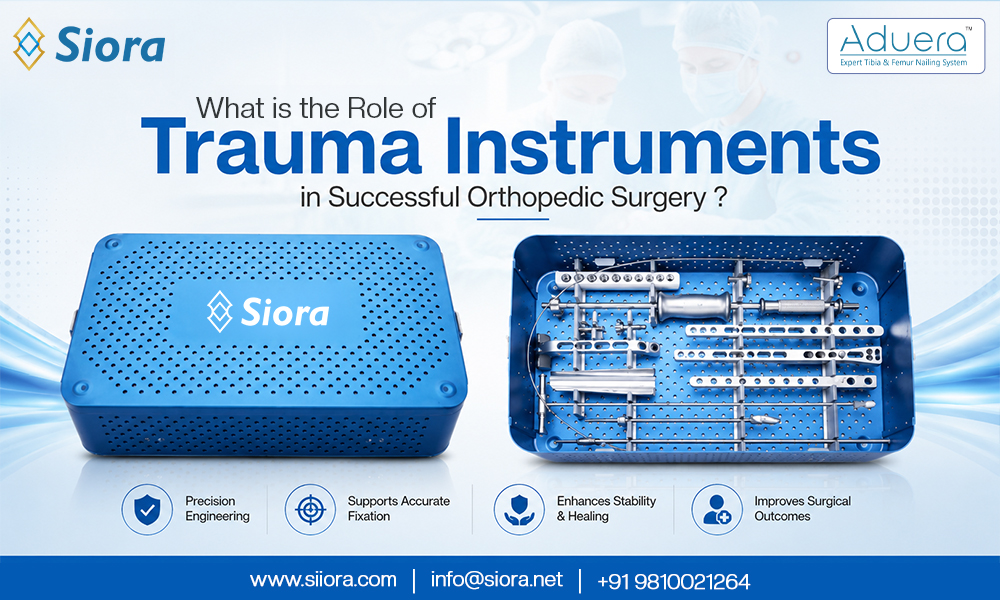
Orthopedic trauma surgery is all about precision, stability, and timely intervention. Whether treating a complex fracture caused by a road accident or repairing a simple bone break after a fall, surgeons rely on more than just implants to achieve successful outcomes. Trauma instruments play an equally important role in ensuring every step of the procedure is performed accurately and efficiently.
Designed specifically for fracture fixation procedures, these specialized instruments help surgeons position bones correctly, prepare implant sites, and securely place orthopedic implants. Without the right instruments, even the highest-quality implants cannot deliver the desired surgical results.
Understanding Trauma Instruments
Trauma instruments are a collection of surgical tools developed to assist in the treatment of bone fractures and musculoskeletal injuries. They are used alongside orthopedic implants such as locking plates, screws, intramedullary nails, and external fixation systems.
Each instrument has a specific purpose during surgery. Some are used to expose the surgical site, while others assist in drilling, measuring, reducing fractures, inserting screws, or positioning implants. Together, they allow surgeons to perform procedures with greater control and confidence.
Ensuring Accurate Fracture Reduction
One of the primary goals of orthopedic trauma surgery is restoring broken bones to their natural anatomical position. Proper alignment is essential for bone healing and the return of normal function.
Trauma instruments such as bone-holding forceps, reduction clamps, and elevators help surgeons manipulate fractured bone fragments with precision. These tools maintain the desired alignment while implants are placed, reducing the risk of malunion or improper healing.
Accurate fracture reduction also contributes to improved joint movement, lower pain levels, and better long-term clinical outcomes.
Supporting Precise Implant Placement
Orthopedic implants are only as effective as their placement. Trauma instruments enable surgeons to position implants accurately while protecting surrounding tissues.
Drill guides, depth gauges, screwdrivers, awls, reamers, and targeting devices help determine the correct implant size and placement angle. These instruments minimize errors during surgery and ensure that screws, plates, and nails fit securely.
Precise implant positioning improves fixation stability and helps patients begin rehabilitation with greater confidence.
Improving Surgical Efficiency
Modern trauma instrument systems are designed to streamline surgical procedures. Instruments are organized in dedicated sets, allowing the operating team to quickly access the required tools without unnecessary delays.
Efficient workflows shorten operative time, which offers several benefits, including:
- Reduced anesthesia exposure
- Lower risk of infection
- Less blood loss
- Improved operating room efficiency
When surgeons have dependable, well-designed instruments at their disposal, procedures become smoother and more predictable.
Compatible with Advanced Orthopedic Techniques
Orthopedic surgery has evolved significantly over the past decade. Many procedures now involve minimally invasive approaches that require specialized trauma instruments capable of working through smaller incisions.
Modern instrument systems support advanced fixation techniques for long bone fractures, periarticular fractures, pelvic injuries, and complex trauma cases. Their compatibility with contemporary implant systems enables surgeons to perform technically demanding procedures with greater precision and confidence.
Choosing High-Quality Trauma Instruments Matters
Not all trauma instruments offer the same level of performance. Hospitals and healthcare providers should select instrument systems manufactured to stringent quality standards using premium materials and precise engineering.
A comprehensive trauma instrument set should provide excellent compatibility with orthopedic implants, easy handling, long-term durability, and dependable performance across a wide range of surgical procedures.
Conclusion
Successful orthopedic trauma surgery depends on the seamless combination of surgical expertise, reliable implants, and precision-engineered trauma instruments. These specialized tools assist surgeons throughout every stage of fracture fixation—from accurate bone reduction and implant placement to improved surgical efficiency and enhanced patient safety.

