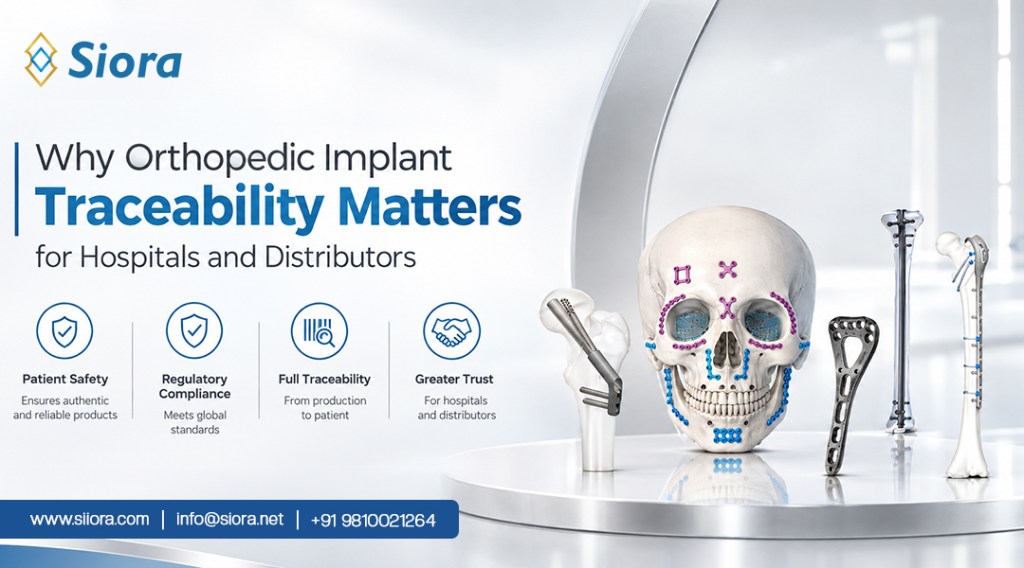
Orthopaedic implants are high-risk medical devices that directly affect the lives of patients. Even a minor flaw in the implant can lead to severe problems, including bone irritation, surgical failure, and even mobility impairment in some cases. This is where traceability comes into play for hospitals and orthopaedic distributors in Malaysia.
Implant traceability helps healthcare professionals identify and pinpoint the exact issue in an implant by verifying its records and its journey from the production unit to the hospital. With proper traceability, surgeons and healthcare professionals can prioritize patient safety and achieve more positive outcomes.
In this article, we have explained why implant traceability matters for hospitals and orthopaedic distributors in Malaysia. Along with that, we’ve also listed some common challenges that manufacturers, distributors, and hospitals face with traceability.
Benefits of traceability for hospitals and distributors
Potential risk identification
In the orthopaedic implant manufacturing process, traceability plays a crucial role. It provides you with a detailed record of each implant – from design to delivery. With a detailed and comprehensive report, it becomes easier for manufacturers and distributors to identify potential risks and flaws, such as material defects and manufacturing errors, in an implant at an early stage. This proactive approach helps prevent serious complications in patients, ensuring their safety and well-being.
Enhanced quality control
For trauma implant manufacturers, traceability plays a vital role in enhancing the quality of these surgical devices. To maintain complete traceability, manufacturers have to maintain detailed reports at every stage of the manufacturing process – from designing the implants to delivering them to distributors and hospitals. In a number of cases, manufacturers are able to identify implant issues. This allows them to improve implant quality significantly, resulting in successful surgeries and healthier patients. When hospitals and distributors deal in high-quality implants, it helps them build a credible and trusted business in the market.
Easier regulatory compliance
Along with enhanced quality, implementing a robust traceability system helps manufacturers strengthen compliance with industry regulations. Regulatory bodies like CE, ISO, and Malaysian MDA set stringent rules and require detailed step-by-step reports to verify the quality and safety of implants before certifying them. Manufacturers who provide complete traceability reports along with other technical documents make auditing and verification easier for these agencies, resulting in seamless certification allotment.
For distributors and hospitals, it helps them offer better accountability to patients, building greater trust and credibility.
Challenges associated with implant traceability
Supply chain complexity
A large number of components are brought together in order to manufacture an implant. Each component must be traced back properly – from its source to final delivery. However, such a large number of components leads to gaps in information, making traceability a big challenge. If records are not maintained in the right way, accountability becomes an issue.
Varying regulatory standards
Another big challenge associated with implant traceability is varying regulatory standards across different regions. Different regions have different sets of rules and regulations for quality, safety, and traceability. This creates a communication gap between manufacturers, distributors, and healthcare professionals.
Technology barriers
While digital solutions enhance traceability, not all manufacturers are able to implement the latest technology. Many manufacturers, especially small ones, don’t have the budget to invest in smart tracking systems and end up with either old or manual tracking systems. Both lead to poor traceability, making it difficult for professionals to find the root of the problem in an implant.
Conclusion
Traceability is a crucial element in the implant manufacturing process and holds great importance for hospitals and orthopaedic distributors in Malaysia. By analyzing the complete report of an implant, it becomes easier for manufacturers and surgeons to identify potential issues in an implant and solve them, improving patient safety and accountability. Traceability not only reduces the risk of device failures but also supports manufacturers with better quality production and regulatory compliance.
However, various challenges, including supply complexity, varying regulations, and evolving technology, continue to make traceability difficult for manufacturers, surgeons, and orthopaedic distributors in Malaysia alike.

